





Mission

To establish a robust foundation for scientific inquiry and consultative excellence, grounded in internationally recognized academic methodologies. We strive to cultivate an institutional environment that empowers faculty and students alike to pursue high-impact research. By fostering strategic collaborations with leading universities, research institutes, and academic centers—nationally, regionally, and globally—we bridge the gap between academic theory and professional practice.
Vision
To position the Center as one of the foremost scientific, research, and advisory references within Arab East Colleges for researchers and decision-makers.
Goals
Contributing to understanding and addressing the challenges faced by government institutions, civil society organizations, and the business sector in areas aligned with the Center’s fields of specialization.
Issuing an annual report highlighting regional and international developments, as well as significant and influential events.
Providing research consultancy and specialized services across various disciplines.
Organizing national, regional, and international scientific conferences and seminars.
Collaborating with research centers and institutes within and beyond the Kingdom.
Promoting research and scholarly activities within the colleges.
Conducting advisory research studies and preparing analytical and consultative reports.
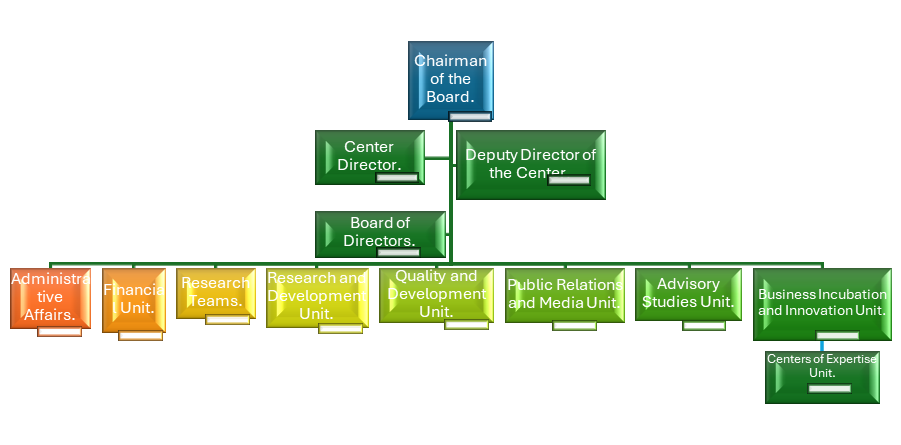
Organizational Structure.

Strategic Objectives.
Enhancing the Research and Innovation Environment: Providing necessary support for researchers and students to conduct high-quality research.
Building National and International Partnerships: Strengthening collaboration with universities, research centers, and institutions supporting scientific research both locally and internationally.
Increasing Scientific Output: Encouraging publication in prestigious journals and improving the quality of published research.
Linking Scientific Research to Society and the Labor Market: Directing research to serve community needs and provide scientific solutions to challenges faced by various sectors.
Developing a Culture of Innovation and Entrepreneurship: Promoting innovation projects and emerging technologies and connecting them to research outcomes.
Beneficiaries.
Internal Beneficiaries:
The Institution Itself: The institution benefits from having a strategic research plan by directing its resources and efforts toward defined research goals and priorities. The plan helps achieve desired outcomes and enhances the institution’s standing in the research field.
Researchers and Research Teams: The strategic plan provides clear objectives and direction for researchers within the institution. Researchers benefit from focusing on important, sustainable, and innovative research areas. The plan supports their scientific development and professional growth.
Industry and Companies: Industry and companies can benefit from a successful institutional research plan through potential collaboration, integration of efforts, knowledge sharing, and technology transfer. This may lead to the development of new products and services or enhancement of technical capabilities.
Scientific Community: The strategic research plan encourages participation in conferences, seminars, and publication of results in scientific journals. It contributes to building researchers’ capacities, increasing scientific knowledge, and deepening understanding across various fields.
Government and Funding Bodies: A strategic research plan within the institution provides opportunities to obtain funding and support from government and funding agencies. It may encourage investment in research projects of strategic and practical significance.
External Beneficiaries:
Scientific Community: Researchers and academics outside the institution can conduct research and advance their specialized fields more effectively. This offers greater freedom to pursue specific projects without the usual institutional constraints.
Companies: Companies can benefit from externally conducted scientific research to develop products, enhance technological innovation, and utilize incubation technologies. Collaboration with researchers can provide solutions to technical problems or new applications.
Governments and Nonprofit Organizations: External scientific research can provide knowledge and advisory support to governments and nonprofit organizations, serving as an important source for analysis and guidance in decision-making.
The General Community: Local and global communities can benefit from research conducted outside the institution by improving quality of life and addressing everyday problems. This may include enhanced healthcare, increased productivity, and solutions to social and economic challenges.