





The Legal Governance Conference for the work of the Boards of Directors concludes its work with the organisation of the Arab East Law College and the Riyadh Chamber
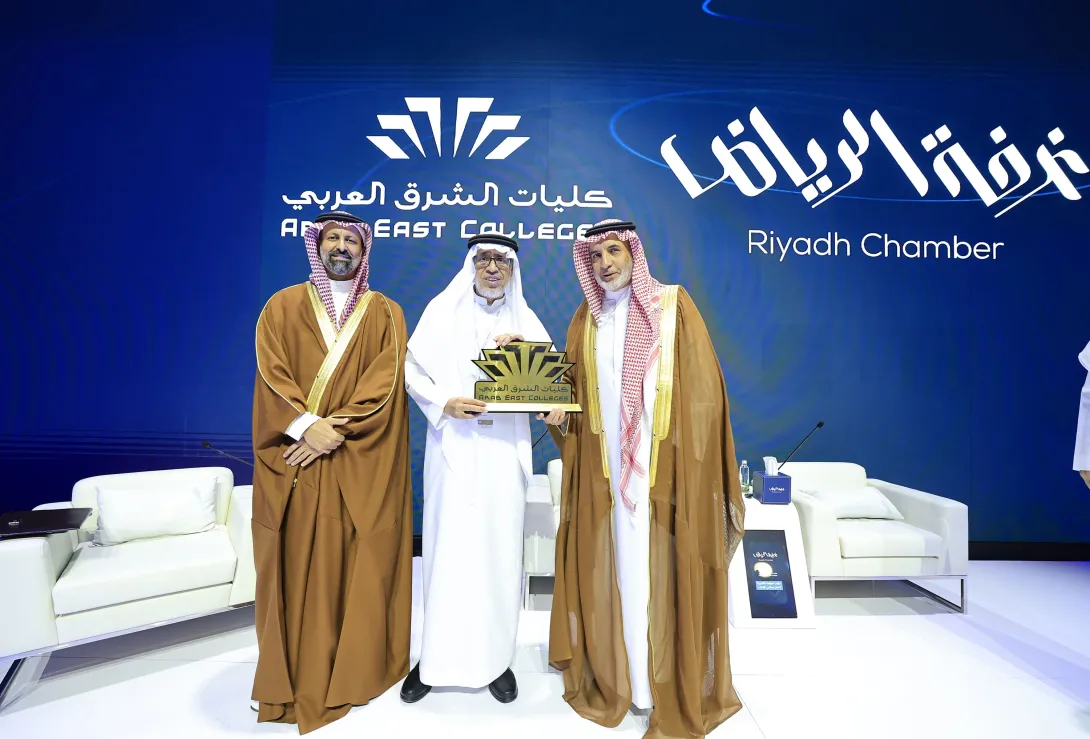
The activities of the Legal Governance Conference for the work of the Boards of Directors organised by the Arab East Colleges represented by the Faculty of Law, in partnership with the Riyadh Chamber at the Riyadh International Convention and Exhibition Centre, concluded today, Wednesday, in the presence of a group of academics and specialists in law, administration and governance.
The conference began with the Royal Peace, followed by the speech of His Excellency the President of the Riyadh Chamber, M. Abdullah bin Abdulrahman Al-Obeikan welcomed the attendees, stressing the importance of this scientific event in supporting the legal and regulatory system of the boards of directors in the Kingdom.
Then the conference began with the first session chaired by His Excellency the Dean of the Arab East College of Law, Dr. Khalid bin Othman Al-Omeir, which was entitled The practical aspects of the legal governance of the work of the boards of directors. At the beginning of the session, Dr. Al-Omeir stressed that the conference is a scientific platform that combines the academic and practical aspect to exchange experiences on best practises in legal governance, pointing out that the implementation of governance is not only a regulatory option, but is a fundamental pillar for achieving integrity and enhancing the confidence of society and investors in national institutions.
Dr. Al-Omeir added that the Arab East Colleges seeks through this event to support the integration of education and practice, and develop research programs and scientific initiatives that enhance the role of law in raising the efficiency of boards of directors, stressing that the success of governance starts from a commitment to accountability and transparency, and extends to building a conscious and responsible institutional culture.
The first session, which was co-presented by H.E. Mr. Mohammed bin Abdullah Al-Quwaiz, Chairman of the Capital Market Authority, and H.E. Eng. Abdullah bin Abdulrahman Al-Obeikan, Chairman of the Board of Directors of Riyadh Chamber, discussed the practical aspects of legal governance, and discussed the definition of governance and its importance for small and medium-sized enterprises, with a focus on ways to achieve it in emerging institutions. The speakers stressed that spreading the culture of governance contributes to the sustainability of companies and enhances their operational efficiency, especially in light of the current economic transformations.
The second session was attended by Dr. Fahad Al-Rifai, H.E. Dr. Khaled Al-Ruwais, H.E. Dr. Zabn Al-Zabban, H.E. Dr. Abdul Rahman Al-Saleh, and H.E. Prof. Dr. Nabil Al-Obeidi. They addressed the practical aspects of the legal governance of the boards of directors in the three sectors: governmental, private, and non-profit, where the speakers reviewed the most prominent regulatory frameworks and modern mechanisms for applying the principles of governance, while highlighting the role of transparency and disclosure in protecting the public interest and enhancing institutional trust. The session was chaired by H.E. Dr. Yasser Al-Surihi.
At the end of the conference, Dr. Khaled Al-Omeir, Dean of the Faculty of Law, on his behalf and on behalf of the employees of the Arab East Colleges, expressed his thanks and appreciation to the President of the Riyadh Chamber for their generous patronage of this conference and their continuous support for scientific and professional initiatives that serve the development of the legal environment in the Kingdom. He also expressed his thanks to the speakers and attendees for their scientific enrichment and contribution to the success of the event.
Al-Omeir stressed that the Arab East Colleges are continuing to organise more legal conferences and seminars that combine academic knowledge and practical application, in an effort to achieve sustainable development and enhance the status of legal education in the service of society and the labour market.